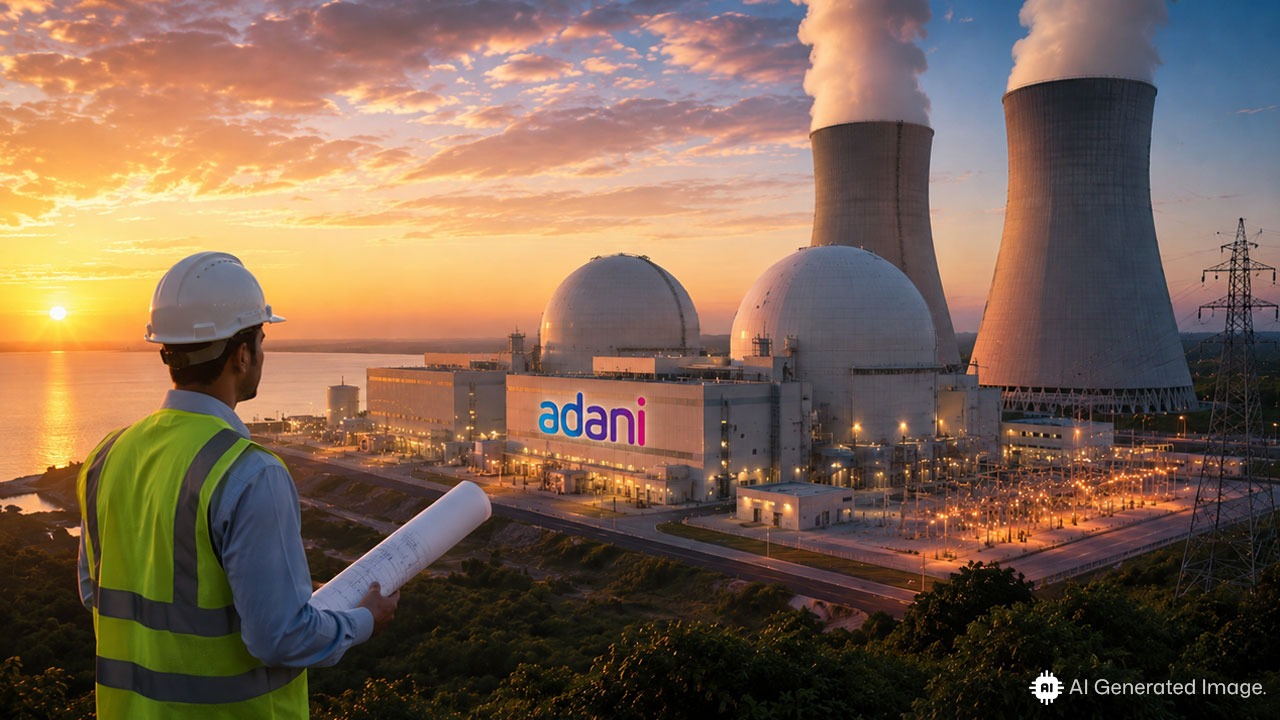
Indian billionaire Gautam Adani has announced plans to enter the nuclear power sector, marking a significant step in the Adani Group’s long-term energy expansion strategy. Speaking at the annual shareholders’ meeting of Adani Enterprises, Adani said the group will develop nuclear power projects through a new subsidiary, Adani Atomic Energy. The company has already identified a site for its first project and aims to build up to 10 gigawatts (GW) of nuclear power capacity by 2035.
Read More | Adani Group Bets $100 Bn on Renewable AI Data Centres by 2035
Adani Group Bets on Nuclear Energy
Adani described the move as part of the group’s broader vision to support India’s growing energy needs while strengthening the country’s energy security. “Our entry into nuclear energy through Adani Atomic Energy is another confident step towards securing India’s long-term energy future,” Adani said. “We are positioning ourselves early to serve the growing national demand for clean, round-the-clock power.”
Read More | India’s Data Centre Industry to Deploy Up to 700,000 GPUs by 2030
The announcement comes at a time when India is looking to diversify its energy mix and reduce dependence on fossil fuels. Nuclear power is increasingly being viewed as a reliable source of low-carbon electricity that can provide continuous power generation.
Massive Investment in Power Expansion
While Adani did not reveal the investment planned specifically for the nuclear project, he announced that Adani Power will invest ₹2 trillion over the next five years. The investment will help the company more than double its electricity generation capacity, increasing it from around 18 GW today to 45 GW. The expansion reflects the group’s growing focus on meeting rising electricity demand driven by industrial growth, urbanisation and the rapid expansion of digital infrastructure across India.

Indrani Priyadarshini is a journalist and editorial professional specialising in technology, artificial intelligence, smart cities, green energy, and digital transformation. With over four years of experience in tech journalism and digital media, she is known for turning complex industry developments into clear, engaging, and insightful stories. Her expertise spans reporting, editorial strategy, digital publishing workflows, and in-depth coverage of emerging technologies shaping the future.