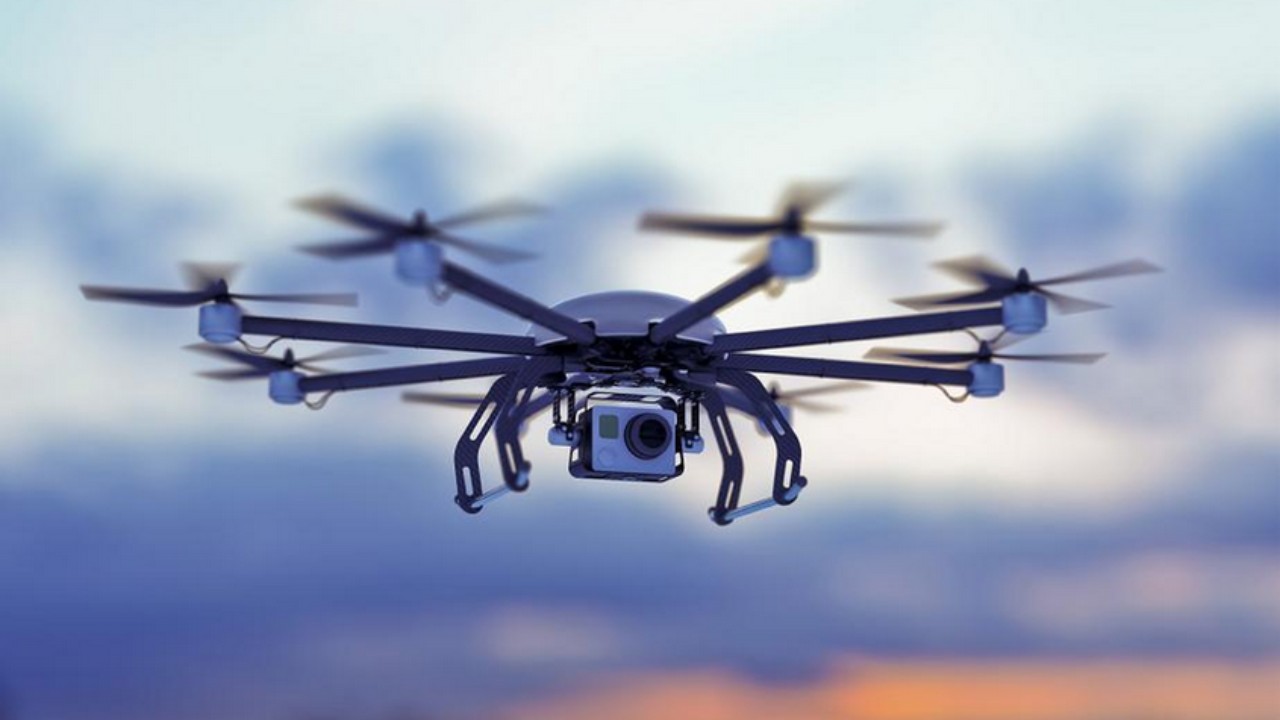
India is stepping up its investment and planning to induct indigenous Kamikaze drones. The army is moving to acquire long-range, artificial intelligence (AI)-enabled loitering munitions capable of striking targets up to 1,000 kilometres away.
The proposed system marks one of India’s most ambitious efforts to strengthen precision strike capabilities while reducing dependence on imported defence equipment.
Also Read: India and New Zealand Deepen Defence-Trade Cooperation with Strategic Partnership and Roadmap 2030
Why India Wants these AI-Powered Drones?
The Army has issued a request to domestic manufacturers seeking one-way attack drones that can travel deep into hostile territory before striking a designated target.
Often referred to as loitering munitions, these drones remain airborne over an area until a suitable target is identified, then carry out a single-use precision attack.
Unlike conventional drones that return after completing surveillance tasks, these platforms are designed to destroy themselves during the strike. Recent conflicts, including the Russia-Ukraine war, have demonstrated how such systems can deliver accurate attacks at a fraction of the cost of traditional missiles.
Also Read: Paras Defence Wins Exclusive India Rights to Build Guardian-1 Counter-Drone Interceptor
AI, Long-Range and GPS-Free Navigation
The Indian Army’s needs go beyond range alone.
- The drones must be capable of operating in GPS-denied environments where satellite signals are jammed or unavailable.
- AI-enabled targeting improves target identification & engagement while reducing reliance on continuous human control.
The requirement further reflects the growing focus on autonomous systems capable of operating in contested electronic warfare environments.
Also Read: Chinese Hackers Target AI and Defence Research in Long-Running Cyber Espionage Campaign
Indigenous Push Gathers Pace
India’s defence research ecosystem has already been working on similar long-range loitering munitions. Scientists at the National Aerospace Laboratories (NAL), under the Council of Scientific and Industrial Research (CSIR), have developed an indigenous concept featuring a domestically built engine, an endurance of around nine hours, speeds of up to 180 kmph and a payload of roughly 25 kg. The platform is also designed to use India’s NAVIC navigation system when GPS is unavailable.
The latest procurement initiative aligns with the government’s efforts for defence self-reliance under the Atmanirbhar Bharat programme. This will also create opportunities for Indian defence manufacturers to develop advanced AI-enabled unmanned systems.
As warfare transitions towards autonomy with low-cost precision systems, India’s investment in indigenous AI-powered loitering drones signals a broader transformation in defence technology.
The programme will be closely watched for its impact on the country’s defence manufacturing ecosystem and the growing role of private industry in next-generation military innovation.

Samarjit Kaur is a journalist and communications professional covering technology & emerging digital trends. With a focus on clarity and context, she reports on developments shaping industries and governance. When not reporting, she chooses to plug-in and relax on her playlists and plan her next bucket-list trips!