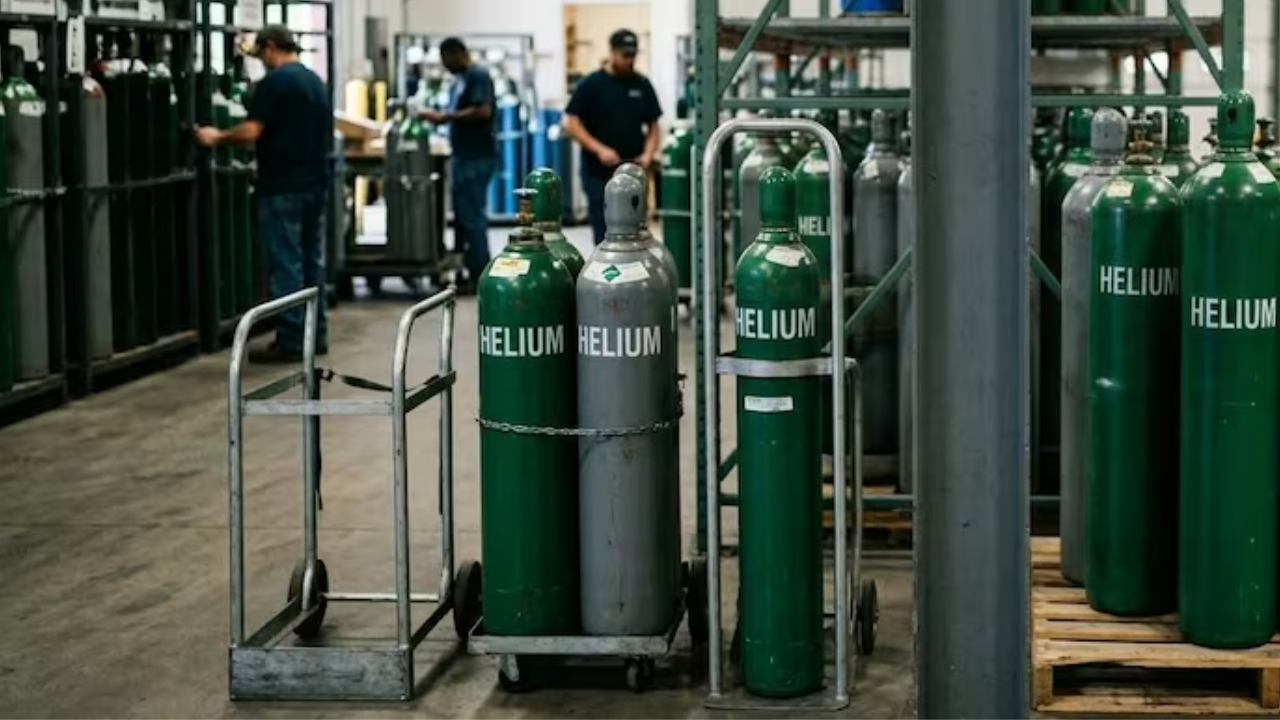
India’s push to scale up semiconductor manufacturing and printed circuit board (PCB) production is facing uncertainty due to disruptions in helium supply. The trigger comes as a ripple effect to the ongoing Iran-Israel conflict. Industry stakeholders warn that rising input costs and constrained availability of the critical gas could slow project timelines and increase financial pressure on upcoming fabrication and electronics manufacturing units.
Also Read: India Targets 2nm & 3nm Chip Manufacturing by Early 2030s Under Semicon 2.0: Ashwini Vaishnaw
Helium Disruption Adds Pressure to Chip Ambitions
Helium is a key input for semiconductor fabrication and electronics manufacturing processes. It has emerged as a new point of vulnerability amid escalating tensions in West Asia. Supply routes to major global producers have been disrupted, reducing availability in international markets.
India, which relies heavily on imports for semiconductor-grade materials, is particularly exposed to such disruptions. Industry executives suggest that helium is important in chip cooling and manufacturing processes, and any sustained shortage could affect production efficiency.
The supply squeeze has already begun pushing up prices globally. For Indian companies working on semiconductor fabs and PCB assembly lines, this translates into higher operating costs and potential delays. The situation comes at a time when the government is actively promoting domestic chip manufacturing as part of its semiconductor mission.
Also Read: India’s Semiconductor Strategy Takes Shape as Production Begins in 2026
Rising Costs and Supply Risks for the Electronics Sector
The ripple effects are not limited to semiconductor fabrication alone. PCB manufacturers and electronics firms are also likely to face higher costs as helium prices rise and procurement becomes more complex.
Manufacturers may be forced to explore alternative sourcing strategies or absorb higher input costs, which would impact pricing across the electronics value chain. Smaller firms may find it more difficult to manage these fluctuations than larger players with diversified supply networks.
The disruption highlights broader risks tied to geopolitical dependencies in critical supply chains. Industry experts suggest that India may need to reassess sourcing strategies and build buffer mechanisms for key materials to safeguard its long-term goals in electronics manufacturing.

Samarjit Kaur is a journalist and communications professional covering technology & emerging digital trends. With a focus on clarity and context, she reports on developments shaping industries and governance. When not reporting, she chooses to plug-in and relax on her playlists and plan her next bucket-list trips!