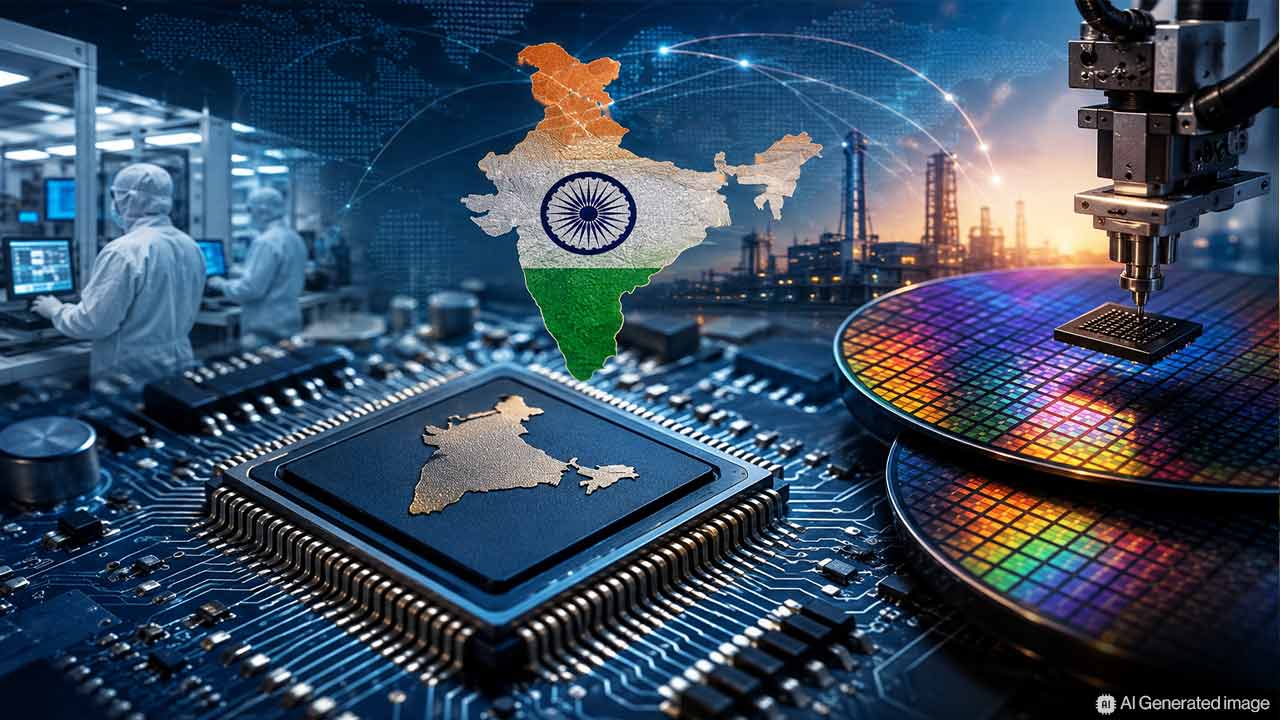
India may need as much as $80 billion in government incentives over the next decade to build a globally competitive semiconductor ecosystem and reduce its dependence on imported chips, according to industry estimates and policy recommendations shaping the country’s long-term technology strategy.
The projection comes as New Delhi accelerates efforts to position India as a major player in the global semiconductor supply chain, amid rising demand for artificial intelligence (AI), data centres, electric vehicles, consumer electronics and advanced manufacturing.
Building a Domestic Chip Industry Demands Massive Capital
The recent roadmap outlined by NITI Aayog estimated that India would need $135 billion and $180 billion (approximately) in total investments to develop a comprehensive semiconductor value chain by 2035.
To attract private capital and reduce project risks, the report recommended that the government contribute one-third of the investment requirement, which would translate into public support of about $45 billion to $60 billion.
Industry experts believe incentive requirements could reach nearly $80 billion as India expands capabilities in fabrication, packaging, design and supporting infrastructure.
The policy push reflects the scale of the challenge. Presently, India imports the vast majority of the semiconductors it consumes, leaving critical sectors exposed to supply chain disruptions and growing import bills. NITI Aayog estimates annual semiconductor imports could reach nearly $240 billion by 2035 if domestic manufacturing capacity does not expand significantly.
Also Read: India Set to Activate Four Semiconductor Plants by December, Says Ashwini Vaishnaw
India Targets a $150 Billion Semiconductor Value Chain
Under its long-term vision, India aims to build a semiconductor value chain worth $120 billion to $150 billion by 2035. The strategy goes beyond manufacturing chips and includes design, fabrication, advanced packaging, materials, equipment and research capabilities.
The roadmap also suggests that India should focus on areas where it can become strategically important rather than directly competing with established leaders in cutting-edge chip production. Advanced packaging, compound semiconductors and specialised design capabilities are among the segments identified as potential growth areas.
Also Read: India Plans ₹7,100 Crore Semiconductor Incentives in FY27 to Accelerate Chip Manufacturing Growth
Demand Growth Creates Urgency
India’s semiconductor market is predicted to expand over the next decade. Smartphone manufacturing, automotive electronics, AI infrastructure, cloud computing and digital services largely drive the progress.
Estimates suggest that the domestic market could reach around $200 billion by 2035, creating a strong business case for local production.
Government-backed initiatives under the India Semiconductor Mission have already approved multiple projects across fabrication, assembly and testing. The next phase will likely focus on strengthening supply chains, attracting global partners and building a skilled workforce capable of supporting large-scale chip manufacturing.
Countries across the globe are racing to secure semiconductor supply chains. India’s ability to sustain long-term policy support and investment could determine whether it emerges as a significant global chip hub or remains largely dependent on imports.

Samarjit Kaur is a journalist and communications professional covering technology & emerging digital trends. With a focus on clarity and context, she reports on developments shaping industries and governance. When not reporting, she chooses to plug-in and relax on her playlists and plan her next bucket-list trips!