The India-Netherlands partnership furthered bilateral ties, with semiconductors emerging as a key focus area during Prime Minister Narendra Modi’s visit to The Hague.
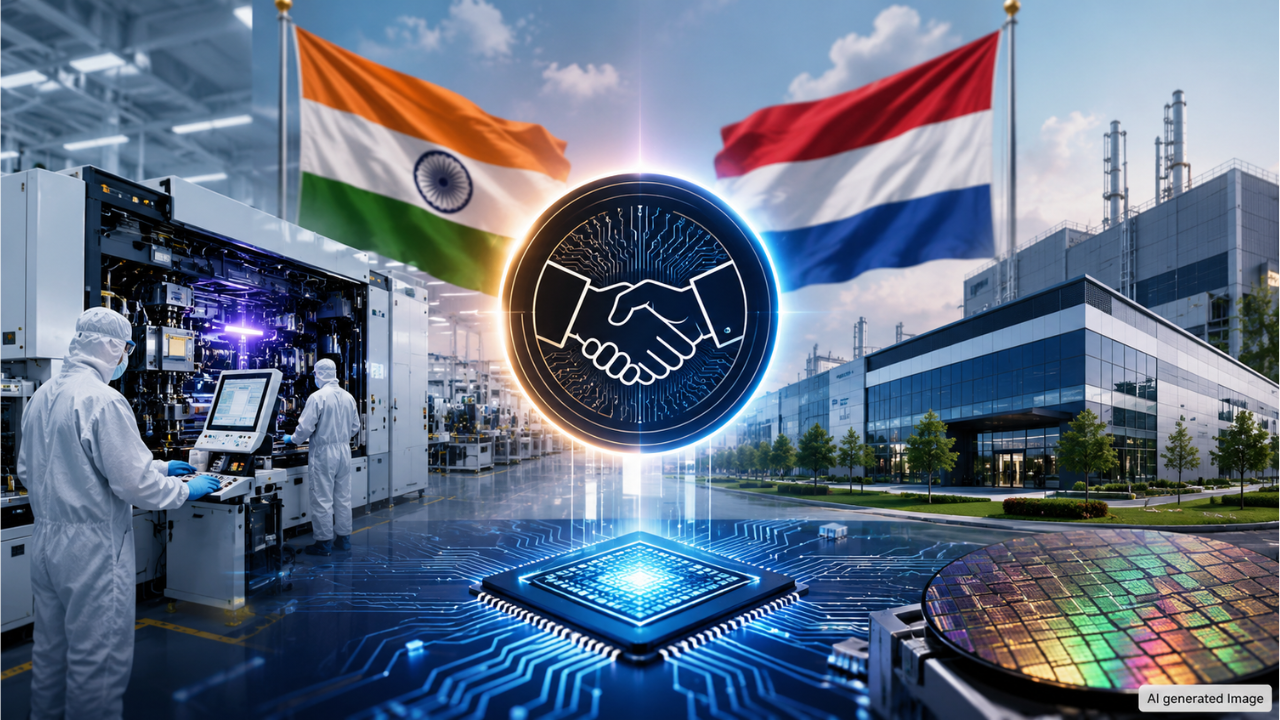
A major outcome of the talks was the signing of a semiconductor manufacturing agreement between Tata Electronics and Dutch chip equipment maker ASML to support India’s first commercial semiconductor fabrication plant in Gujarat.
The agreement is linked to Tata Electronics’ upcoming semiconductor facility in Dholera, Gujarat. It is a project valued at around $11 billion.
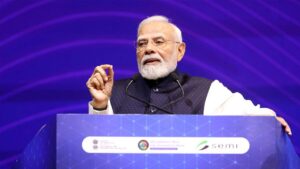
The deal was signed in the presence of Modi and Dutch Prime Minister Rob Jetten during bilateral engagements in the Netherlands.
Also Read: India Clears First Ever Semiconductor SEZ for Tata’s ₹91,000 Crore Chip Plant at Dholera
Tata Electronics-ASML Deal Strengthens India’s Chip Manufacturing Push
Under the memorandum of understanding (MoU), ASML will supply lithography systems and related technology for Tata Electronics’ 300 mm semiconductor fabrication facility in Dholera. The project is expected to manufacture chips for sectors including automotive, mobile devices, artificial intelligence (AI) and industrial electronics.
The partnership will also focus on workforce training, semiconductor research, supply chain resilience and skill development for advanced chip manufacturing operations in India. ASML said the collaboration would support the establishment and ramp-up of India’s first front-end semiconductor fab.
India has boosted efforts to build a domestic semiconductor ecosystem. This is being done through production-linked incentives and government-backed investments.
Various semiconductor projects are currently underway across the country as the centre seeks to reduce dependence on imports while strengthening electronics manufacturing capacity.
Also Read: ₹1.2 lakh crore: India Braces for Massive Boost in Semiconductor & Chip Manufacturing Ecosystem
India-Netherlands Relations Extend Beyond Trade
India and the Netherlands have further adopted a broader strategic partnership roadmap.
This includes trade, investment, important technologies, defence cooperation, renewable energy and digital innovation. Officials from both countries described semiconductors as a priority area for long-term collaboration.
During the meetings, PM Modi encouraged Dutch companies to increase investments in sectors such as semiconductors, green hydrogen, healthcare and digital technologies.
Both sides also backed faster progress on the India-European Union free trade agreement discussions.
The Netherlands has the world’s most advanced semiconductor ecosystem, supported by ASML, a leading supplier of chipmaking equipment.
Industry analysts view the Tata-ASML partnership as a significant development for India’s ambitions to become a semiconductor manufacturing hub amid growing global demand for AI and advanced electronics.

Samarjit Kaur is a journalist and communications professional covering technology & emerging digital trends. With a focus on clarity and context, she reports on developments shaping industries and governance. When not reporting, she chooses to plug-in and relax on her playlists and plan her next bucket-list trips!