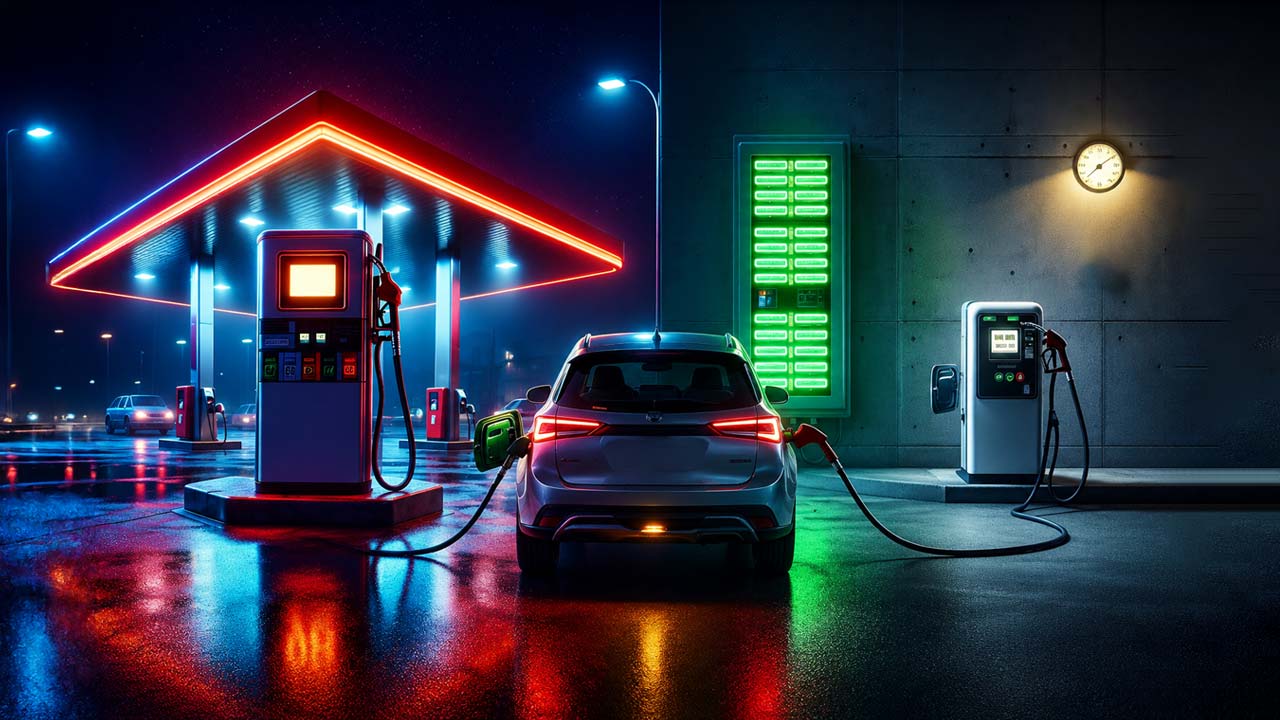
Anyone planning to buy a new car in 2026 is likely checking the EV Cost Calculator and weighing an EV against a petrol, diesel or hybrid alternative. Electric vehicles (EVs) are no longer a niche purchase in India.
Falling battery prices, expanding charging networks and lower running costs have made them a realistic option for many buyers. But the biggest question remains: will an EV actually save you money in 2026? The answer depends on far more than the sticker price.
This guide explains how to calculate the true cost of ownership, who stands to benefit and when an EV may not be the best financial choice.
Should you Buy an Electric Vehicle in 2026?
Buying a vehicle is everything about lifetime ownership costs. While EVs generally cost more upfront, they can prove cheaper over five to eight years, depending on how much they are driven.
For many buyers, the question is no longer whether electric vehicles work. It is whether the numbers make financial sense.
The answer varies according to:
- Annual driving distance
- Electricity prices
- Access to home charging
- Local charging facilities
- Maintenance costs
- Resale value
- Government incentives
Looking only at the showroom price rarely tells the full story.
How to Calculate the Real Cost of Owning an EV?
Most buyers compare the purchase price of two vehicles. Financial experts instead recommend calculating the Total Cost of Ownership (TCO).
TCO includes every major expense over the vehicle’s lifespan.
Calculate:
Purchase price
Minus:
- Any government subsidy
- Dealer discounts
Add:
- Registration
- Insurance
- Charging equipment installation
- If financed, loan interest
Add miscellaneous annual costs:
- Electricity
- Vehicle servicing
- Tyres
- Insurance renewal
- Battery warranty
- Parking or public charging expenses
Lastly, deduct the expected resale value after ownership ends. This provides a clearer picture than just comparing fuel and energy bills.
Also Read: Haryana EV policy: State Mandates EV Chargers For New Housing Projects
EV vs Petrol: A Practical Ownership Comparison
Consider two prospective buyers planning to purchase a compact SUV in 2026.
The first chooses a petrol model costing approximately ₹15 lakh, while the other opts for an electric variant priced at ₹18 lakh.
The EV buyer spends more initially while saving money every month through lower charging & servicing costs.
Example calculation:
| Expense (5 years) | Depends on battery health | Electric Vehicle |
| Purchase Price | ₹15 lakh | ₹18 lakh |
| Fuel/Electricity | ₹5.4 lakh | ₹1.4 lakh |
| Maintenance | ₹1.2 lakh | ₹55,000 |
| Insurance | Similar | Similar |
| Total Running Cost | Higher | Lower |
| Estimated Resale | Moderate | Depends on battery health |
The figures vary between models and usage patterns, but they illustrate why ownership costs often outweigh the initial purchase price.
When Does an EV Become Cheaper?
Industry analysts often refer to the break-even point.
This is when the savings from lower running costs recover the higher purchase price.
Typical estimates suggest:
- 10,000 km annually: Savings may take seven to eight years.
- 15,000 km annually: Around five to six years.
- 20,000 km or more: Three to four years.
Taxi operators, ride-hailing drivers and delivery fleets generally reach this point much faster because they cover significantly higher distances each year.
For someone who drives only occasionally, the economics become less convincing.
Charging Costs Vs Fuel Expenses
Electricity is considerably cheaper than petrol on a per-kilometre basis.
For example:
- Home charging often costs between ₹1 and ₹2 per kilometre.
- Public fast charging may cost ₹2.5 to ₹4 per kilometre.
- Petrol vehicles generally cost ₹7 to ₹10 per kilometre, depending on fuel prices and operational factors.
Home charging provides the greatest savings.
Drivers relying exclusively on public fast chargers should factor higher operating costs into their calculations.
Also Read: EV Infrastructure in India: Karnataka Gets Greenlight for 1,243 EV Charging Stations
What Maintenance Savings Can Buyers Expect?
Electric vehicles have fewer moving parts in comparison to internal combustion engine (ICE) vehicles.
They generally do not need repetitive:
- Engine oil changes
- Spark plugs
- Clutch replacements
- Exhaust repairs
- Timing belts
Routine servicing generally focuses on:
- Brake fluid
- Cabin filters
- Tyres
- Suspension
- Software updates
- Battery health checks
Regenerative braking further reduces wear on brake pads, extending replacement intervals.
Lower maintenance costs are one of the strongest financial arguments in favour of EV ownership.
Battery Life: Should Buyers Still Be Worried?
Battery replacement remains one of the biggest concerns among prospective EV buyers. Modern lithium-ion batteries, however, have improved significantly.
Most manufacturers now provide battery warranties of around eight years or 160,000 kilometres, although terms vary.
Studies across global markets suggest many batteries retain well over 70–80% of their original capacity after years of regular use.
For buyers planning to own a vehicle for five to seven years, battery degradation is becoming less of a financial risk than it was a decade ago.
Who Gains Advantage From Switching?
Electric vehicles is not made for every driver’s needs.
Buyers likely to benefit:
- Daily commuters
- Families with home parking
- Fleet operators
- Corporate employees travelling regularly
- Taxi services
- Delivery businesses
- Government institutions replacing vehicle fleets
Which buyers must wait?
- Rural users with limited access to charging infrastructure
- Long-distance highway users
- Apartment residents without reliable charging
- Buyers who replace vehicles every two or three years
How Businesses Can Benefit From EV Adoption
The financial case becomes even stronger for businesses operating multiple vehicles.
For example, an e-commerce logistics company running 100 delivery vans could reduce fuel expenditure substantially by switching to electric vehicles, particularly if depot charging is available overnight.
Similarly, a field services company could monitor charging schedules, maintenance and route planning through fleet management software, improving vehicle utilisation while reducing operating costs.
Lower running expenses also help companies manage transport budgets more predictably, especially during periods of volatile fuel prices.
Government Policy & Incentives
Government support continues to influence EV adoption, although incentives have evolved over recent years.
Support may include:
- State-level purchase incentives
- Lower road tax in several states
- Slashed registration charges
- Public investment in charging infrastructure
- Manufacturing incentives for producing batteries
Policies in India vary across states and are subject to change over time. Buyers must confirm the benefits before finalising a purchase rather than making assumptions.
Also Read: Vehicle-Based Wireless Communication: TRAI Begins Review of Spectrum Pricing in India
Winners and Losers As EV Adoption Grows
| Winners | Challenges |
| EV manufacturers | Traditional engine component suppliers |
| Battery producers | Fuel retailers dependent on petrol sales |
| Charging network operators | Independent engine repair workshops |
| Renewable energy companies | Businesses focused solely on ICE technologies |
| Fleet operators reducing fuel costs | Companies slow to adapt to electrification |
How India’s EV Market has Evolved?

Also Read: India’s EV Charging Infrastructure: What Needs to Change?
Choosing What Works for You:
Transport economists increasingly argue that purchase price alone is becoming a poor indicator of value.
As battery costs fall and charging infrastructure expands, ownership economics is improving.
However, experts also caution that buying decisions should reflect individual driving patterns rather than general market trends.
For many households, an EV represents the lowest-cost option only if annual mileage is sufficiently high and convenient charging is available.
Switching to an electric vehicle in 2026 makes strong financial sense for many buyers, but not all. The smartest purchase is therefore not the cheapest vehicle on the forecourt, but the one that delivers the lowest total cost over the years you intend to own it.
Frequently Asked Questions About EV Cost Calculator:
Q. Is an EV cheaper than a petrol car?
A. Over the years, it can be. Lower electricity and maintenance costs may offset the higher purchase price, particularly for drivers covering long annual distances.
Q. Is charging always cheaper than petrol?
A. Home charging generally offers the greatest savings. Exclusive reliance on public fast chargers narrows the cost advantage.
Q. Are batteries expensive to replace?
A. Replacement remains costly, but most buyers are unlikely to need one during the warranty period.
Q. Should apartment residents buy an EV?
A. It depends on charging access. Without convenient overnight charging, ownership becomes less practical.
Q. Are hybrids a better option?
A. For drivers frequently travelling long distances where charging is limited, hybrids may provide a useful compromise between fuel efficiency and convenience.
Q. What should buyers consider before making a decision?
A. Before purchasing an EV, ask:
- How many kilometres do I drive each year?
- Can I install home charging?
- Will I mostly charge overnight?
- How long will I keep the vehicle?
- Are state incentives available?
- How strong is the manufacturer’s charging ecosystem?
- What warranty is offered for the battery?
Answering these questions is often more valuable than comparing showroom prices.

Samarjit Kaur is a journalist and communications professional covering technology & emerging digital trends. With a focus on clarity and context, she reports on developments shaping industries and governance. When not reporting, she chooses to plug-in and relax on her playlists and plan her next bucket-list trips!