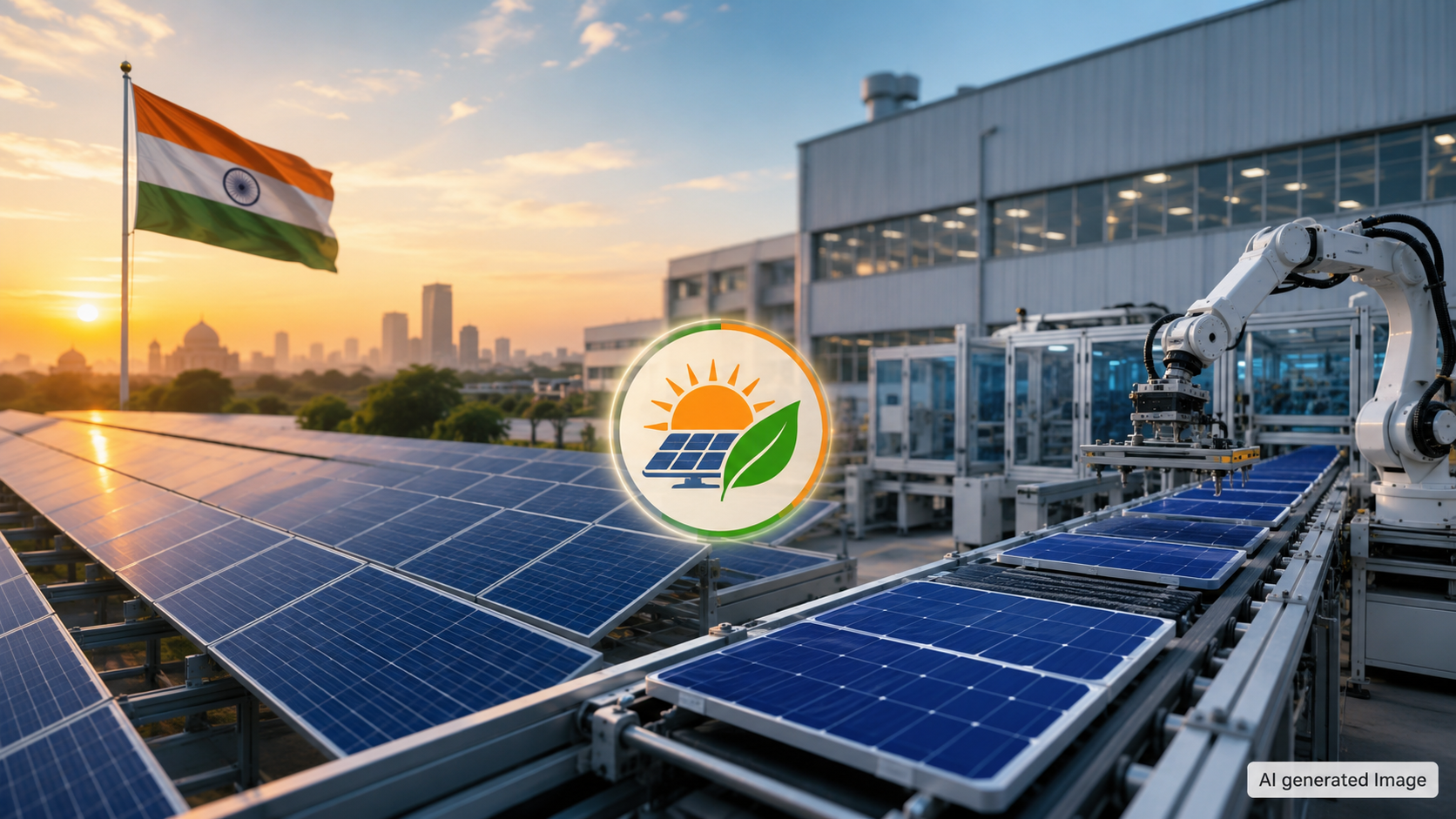
India has started enforcing stricter domestic content requirements for solar power projects. This is being done using domestic solar cells, which are now mandatory for government-backed renewable energy installations from June 2026.
The aim is to strengthen the country’s solar manufacturing ecosystem and reduce dependence on imports, particularly from China.
The move has sparked concerns among parts of the industry about higher project costs and supply constraints.
Also Read: India-Norway Green Strategic Partnership: Modi, Norway PM Sign Deals on AI, Space and Clean Energy
Domestic Solar Cell Manufacturing Push Gains Momentum
The new mandate expands India’s existing domestic content framework. It requires both solar modules and solar cells used in government-supported projects to be sourced from approved domestic manufacturers.
The policy is part of the broader aim to build a self-reliant clean energy supply chain as India speeds up its renewable energy transition goals.
The measure will encourage investments in local manufacturing, create jobs and improve supply chain resilience.
Over the past few years, the government has introduced a series of initiatives, such as PM Surya Ghar and PM-KUSUM (Pradhan Mantri Kisan Urja Suraksha Evam Utthaan Mahabhiyaan). These policies include production-linked incentives and import duties that boost domestic solar equipment production.
The policy also aligns with India’s long-term goal of expanding solar power capacity while developing a globally competitive manufacturing base for renewable energy technologies.
Also Read: Switzerland Installs Solar Panels on Railway Tracks to Expand Renewable Energy Capacity
Developers Raise Concerns Over Costs and Supply Availability
While manufacturers welcome the mandate, some project developers and renewable energy companies have expressed concerns about the immediate impact on project economics.
Industry experts say that domestically produced solar cells currently cost more than imported alternatives, potentially increasing overall project costs. Developers have flagged potential supply shortages as domestic manufacturing capacity continues to scale further within the sector.
Some market participants believe the transition period may create procurement challenges, particularly for projects with tight commissioning timelines.
Supporters of the policy argue that short-term cost pressures will ease as production volumes increase and domestic manufacturing has become more productive. Local capacity development remains important for reducing external dependencies and ensuring energy security.
The debate highlights the balancing act that India’s renewable energy sector faces: achieving rapid solar deployment while building a strong domestic manufacturing ecosystem.
As implementation begins, what needs to be closely watched is the impact on project costs, manufacturing investments and the pace of India’s clean energy expansion.

Samarjit Kaur is a journalist and communications professional covering technology & emerging digital trends. With a focus on clarity and context, she reports on developments shaping industries and governance. When not reporting, she chooses to plug-in and relax on her playlists and plan her next bucket-list trips!