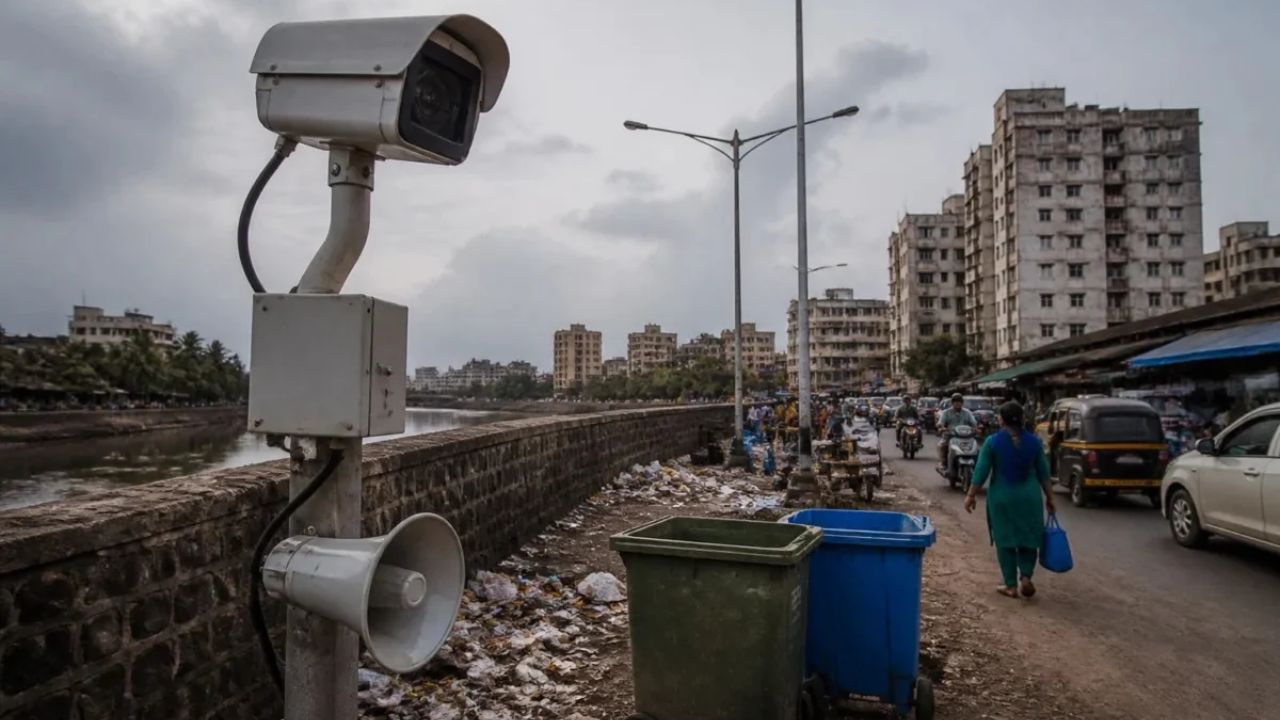
Mumbai’s fight against open garbage dumping is getting a technological upgrade. The Brihanmumbai Municipal Corporation (BMC) has installed an AI-powered camera at a garbage vulnerable spot in Mahim on a pilot basis, hoping to discourage people from throwing waste in public spaces.
The camera is designed to detect when someone approaches the location to dump garbage and immediately issue an audio warning through a connected loudspeaker. The announcement alerts the individual against littering and urges them to keep the surroundings clean.
The initiative marks the BMC’s first use of an AI-powered camera for this purpose. The civic body will assess the system’s effectiveness before deciding whether to introduce similar installations at other garbage-prone locations across Mumbai.
How Does the BMC’s AI-Powered Garbage Monitoring Camera Work?
Once the camera detects someone approaching the identified spot to dispose of waste, a connected loudspeaker plays an announcement asking the person not to litter. The idea is to discourage illegal dumping before garbage accumulates at the location.
Read More | World Bank to Fund Chennai’s Flood Control, EV Charging and Green Infra Projects
“We installed the camera late last night as a pilot. We have identified 23 garbage-vulnerable points in the ward where people dump waste indiscriminately,” stated Yogesh Desai, assistant commissioner of the BMC’s G/North ward.
However, the technology does not automatically generate a challan or fine memo when it detects an offence. Municipal employees must be present at the location to identify offenders and take the necessary enforcement action.
This means the camera can help detect suspicious activity and discourage people through real-time warnings, but its ability to support enforcement still depends on the availability of civic staff.
How Many Garbage-Vulnerable Spots Has the BMC Identified in Mumbai?
The BMC has identified 286 garbage-vulnerable spots (GVPs) across Mumbai. These are locations where waste is repeatedly dumped, creating problems for residents and the city’s waste management system.
According to the civic body’s data, R-South ward, which covers Kandivali, Charkop and parts of Malad, has the highest number of identified locations, with 28 garbage-vulnerable spots. M-East ward, covering Govandi and Deonar; M-West ward, which includes Chembur and areas around Mahim Creek; and G-North ward, covering Dadar, Mahim and Dharavi, have 23 such locations each.
Read More | AATAL: New Delhi-NCR air pollution lab can identify pollution sources in real time
P-North ward, which includes Malad and Malvani, has another 22 identified spots.
The distribution highlights the scale of the problem across Mumbai, with several western, eastern and central neighbourhoods requiring regular monitoring and improved waste collection.
Has the BMC Used CCTV Cameras to Prevent Garbage Dumping Before?
Yes. The BMC has previously installed conventional CCTV cameras at 130 locations across the city to monitor garbage dumping and identify recurring problem areas.
Read More | Bengaluru Traffic Police Wins MoHUA Award for AI-Driven Traffic Management
According to the civic body, the initiative helped eliminate more than 100 garbage-dumping spots. F-North ward, which covers Sion, Matunga and Wadala, has the highest number of these CCTV installations, with 11 cameras.
The new AI-powered installation in Mahim takes this monitoring approach a step further by adding automated detection and an immediate audio warning. Rather than relying only on footage that civic officials can review later, the system is intended to respond when potential dumping activity takes place.
Nevertheless, technology alone may not be enough to keep these locations clean. Regular garbage collection, adequate municipal staffing and action against repeat offenders will remain important parts of the process.
What Happens Next?
The AI-powered camera in Mahim is currently a pilot project. The BMC will first evaluate how effectively it discourages open garbage dumping before deciding whether to extend the system to other garbage-vulnerable locations. For now, the civic body has also appealed to residents to avoid dumping waste on roads, vacant plots, open spaces and other public places.
The success of the initiative will ultimately depend on more than the camera’s ability to detect activity. Consistent enforcement, timely waste collection and public cooperation will be equally important if Mumbai wants to prevent cleared dumping spots from becoming garbage hotspots again.

Indrani Priyadarshini is a journalist and editorial professional specialising in technology, artificial intelligence, smart cities, green energy, and digital transformation. With over four years of experience in tech journalism and digital media, she is known for turning complex industry developments into clear, engaging, and insightful stories. Her expertise spans reporting, editorial strategy, digital publishing workflows, and in-depth coverage of emerging technologies shaping the future.